

The Enigmatic Hibiscus Flower: Unveiling Love Divination and Its Deep Red Power

The hibiscus flower draws attention with its bright colors and soft petals, but there’s more than just looks. Throughout history, it has symbolized love and divination. The deep red hibiscus, in particular, represents passion and emotional strength. Learning about hibiscus shows how nature and human feelings are closely connected.
If Rue is known as the silver-blue guardian and Marigold as the golden healer, then Hibiscus is the deep-red temple flower: sensual, wise, cooling, and ancient. It’s an herb linked to goddesses, true love, divination, dreams, and the rich red tea enjoyed from Cairo to Kingston to Guadalajara.
Hibiscus shows that some of the most magical herbs are also the tastiest. You might know it without realizing—it’s the deep red in agua de Jamaica, the tang in herbal teas, and the color that makes drinks look like liquid rubies. Spiritually, hibiscus has symbolized love, passion, prophecy, and feminine power for thousands of years.
Meet the Herb
Hibiscus is a large genus of flowering plants with hundreds of species, but the one used in the apothecary is almost always Hibiscus sabdariffa, sometimes called Roselle, Jamaica flower, Flor de Jamaica, karkade (in Egypt and Sudan), sorrel (in the Caribbean), or bissap (in West Africa). The plant is a tall, striking annual with deep red stems, lobed leaves, and creamy yellow flowers with dark centers.
What we use as the herb, however, isn't the flower. It's the fleshy red calyx, the fluted, cup-shaped structure at the base of the flower that swells and becomes deep crimson after the flower fades. These calyces are dried and turn water into that unmistakable ruby-red color the moment they touch it.
Hibiscus comes from tropical Africa and has spread with people across the world for thousands of years. It’s found in Egypt, the Middle East, the Caribbean, Latin America, and Southeast Asia. Many warm-climate cultures have their own special hibiscus traditions, often built up over centuries.
In the apothecary, Hibiscus is sold as dried calyces, deep red, slightly leathery, with a distinctive tart-fruity aroma that hints at cranberry, pomegranate, and rose. At Rock Collage, you'll find Hibiscus in our apothecary herb selection, and it appears in our love-drawing oils, divination blends, and heart-healing preparations.
The Symbolism of Hibiscus in Love
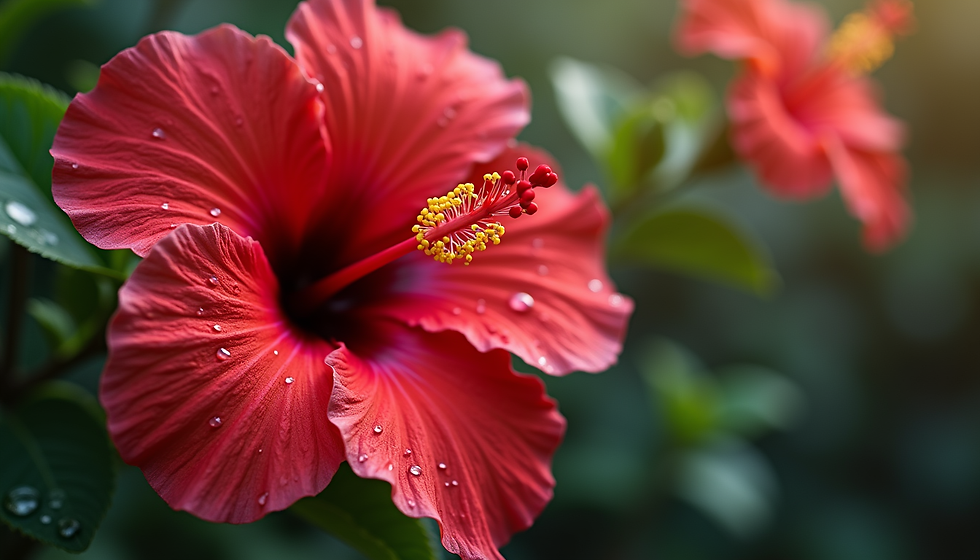
The hibiscus flower has long been associated with love and romance in many cultures. Its vibrant colors and fleeting bloom make it a perfect metaphor for the intensity and transience of passion. In particular, the deep red hibiscus symbolizes:
Romantic love: The red hue reflects desire and deep affection.
Beauty and femininity: Often linked to grace and delicate charm.
Respect and honor: In some traditions, giving a hibiscus expresses admiration.
For example, in Hawaiian culture, women wear hibiscus flowers to signal their relationship status. A flower behind the left ear means she is taken, while behind the right ear means she is single and available. This simple yet powerful gesture uses the hibiscus as a natural language of love.
Medicinal Uses
Hibiscus is a beautiful herb with both a deep traditional history and strong modern scientific support. It's used across dozens of cultures, and modern research keeps confirming what those cultures have always known.
Traditional and contemporary uses include:
Blood pressure support: This is Hibiscus's most-researched benefit. Multiple clinical studies suggest that regular Hibiscus tea consumption can meaningfully lower elevated blood pressure in some studies, to levels comparable to certain first-line pharmaceutical treatments.
Heart health: Beyond blood pressure, Hibiscus has been shown to support healthy cholesterol levels and provide antioxidant protection for the cardiovascular system.
Cooling and hydration: In traditional systems from Egypt to Mexico to West Africa, Hibiscus is the classic hot-climate refreshment a naturally cooling drink that hydrates and refreshes.
Menstrual support: Hibiscus tea is traditionally used to support healthy menstrual flow and ease cramps. Because of its emmenagogue action, it should be avoided during pregnancy.
Digestive support: Mild diuretic and gentle digestive tonic; often used for water retention and sluggish digestion.
Liver support: Traditional and some modern research suggests Hibiscus may support liver function and help protect the liver from oxidative stress.
Vitamin C and antioxidants: Hibiscus is exceptionally rich in vitamin C, anthocyanins, and other polyphenols — the same compounds that give it that deep red color also make it a potent antioxidant.
Fever reduction: Traditionally used in tropical cultures as a cooling herb during fevers.
Weight and metabolism support: Some studies suggest Hibiscus may support healthy metabolism and fat processing.
A note on safety: Hibiscus is usually safe as a food and drink for most adults. Many cultures enjoy it daily without problems. However, since it can lower blood pressure, people taking blood pressure medicine should talk to their doctor before drinking hibiscus tea daily. Avoid large medicinal amounts during pregnancy—small amounts in food are likely fine, but big doses are not recommended. Hibiscus can also interact with some medicines, like diuretics and diabetes drugs. Always check with a qualified herbalist or your healthcare provider before using it for health reasons.
Hibiscus in Divination Practices
Besides its symbolism, the hibiscus flower is used in divination and spiritual rituals. It blooms for only a short time, often just a day, so it stands for fleeting moments and the need to seize opportunities. People who practice divination use hibiscus petals in several ways:
Petal reading: Similar to the "he loves me, he loves me not" game, petals are plucked one by one to reveal answers about love or future events.
Offerings and prayers: Hibiscus flowers are offered to deities in many cultures to seek blessings or guidance.
Dream interpretation: Seeing hibiscus flowers in dreams can indicate upcoming changes in relationships or emotional growth.
These practices highlight the hibiscus as a bridge between the physical and spiritual worlds, helping people connect with their intuition and emotions.

Mundane & Everyday Uses
Hibiscus might be the most delicious herb in this entire series. Its everyday uses are dominated by its role as one of the world's great beverages:
Iced Hibiscus tea (agua de Jamaica): Cold-steep or hot-brew Hibiscus, sweeten to taste, chill, and serve over ice. This drink is popular in Mexican summers, Egyptian celebrations, and Caribbean afternoons.
Hot Hibiscus tea: Brew like any tea: one heaping teaspoon of dried calyces per cup of hot water; steep 5–10 minutes. Add honey and a squeeze of lime for a beautiful daily drink.
Hibiscus lemonade: Combine Hibiscus tea with fresh lemon juice, honey, and cold water for one of the best summer drinks in existence.
Cocktail base: Hibiscus syrup is a bartender's secret; it makes gorgeous margaritas, mocktails, and champagne cocktails.
Cooking: In West African cuisine, Hibiscus is used in sauces and stews. In Mexican cuisine, rehydrated Hibiscus calyces are used to make tacos de Jamaica, a beloved vegetarian dish.
Natural food dye: Hibiscus produces a stunning natural pink-to-deep-red color in frostings, yogurt, and cold preparations.
Hair rinse: Steeped Hibiscus water is a traditional hair rinse in South Asian and Caribbean beauty traditions believed to strengthen hair, add shine, and enhance natural dark tones.
Skin toner: Cooled Hibiscus tea makes a gentle, antioxidant-rich toner for the face.
Popsicle bases: Hibiscus tea sweetened with honey freezes into some of the most beautiful and refreshing popsicles you'll ever have.
Jam and jelly: Hibiscus calyces make gorgeous ruby-red jam.
The main idea with hibiscus is joy. This herb belongs in your life because it’s beautiful, tasty, good for your health, and very versatile.
Magical & Spiritual Uses
Hibiscus has been sacred across cultures for thousands of years, and its spiritual uses are as rich as its medicinal ones:
Love drawing: Hibiscus is one of the classic love-drawing herbs in Hoodoo, Caribbean folk magic, and various African diaspora traditions. It's used to draw new love, deepen existing love, and heal heartbreak.
Sensuality and passion: The deep red color and heart-opening nature of Hibiscus make it a natural ally for passion work igniting desire, deepening intimacy, and honoring the sensual body.
Divination and dreams: Hibiscus is used to enhance psychic sensitivity, encourage prophetic dreams, and support divinatory work. A cup of Hibiscus tea before tarot or scrying is traditional in some practices.
Goddess worship: Hibiscus is sacred to multiple goddesses, including Kali (in Hindu tradition, where red Hibiscus flowers are offered to her), Oshun (the Yoruba orisha of love, beauty, and sweet waters, who is often offered honey-sweetened Hibiscus), and various forms of Venus/Aphrodite in Western traditions.
Heart healing: Because of its association with both the physical and emotional heart, Hibiscus is used in grief work, in healing from heartbreak, and in opening a closed heart back up to love.
Feminine power and menstruation: Traditionally honored as an herb of the sacred feminine and the menstrual cycle. Used in menarche celebrations in some cultures.
Beauty and self-love: Worn behind the ear (in the Pacific Islands, famously) or added to beauty rituals, Hibiscus supports self-love, self-recognition, and personal beauty.
Attracting spiritual attention: In Yoruba and Yoruba-diaspora traditions, red Hibiscus is offered to draw the attention of Oshun and other spirits associated with sweetness, love, and abundance.
Its correspondences across traditions:
Element: Water (emotion, love, intuition) and Fire (passion, desire)
Planet: Venus (love, beauty) with strong lunar associations for its cyclical, feminine nature
Day: Friday (Venus, love) or Monday (moon, intuition)
Zodiac: Libra and Taurus (Venus rulership), with Scorpio associations for its sensual depth
Intention: Love, passion, divination, dreams, feminine power, heart-healing, beauty, self-love
Classic magical practices:
Love-drawing tea: Brew Hibiscus tea while focusing on the qualities of love you're calling in (not a specific person, but the qualities). Sweeten with honey. Drink slowly and mindfully.
Divination bath: A warm bath with Hibiscus, rose petals, and a pinch of salt taken before divinatory work is traditional in some Caribbean and Latin American practices.
Offering to Oshun: A dish of honey-sweetened Hibiscus tea placed on an altar or by a body of fresh water is a traditional offering to Oshun in Yoruba-derived spiritual traditions.
Heart-opening ritual: Hibiscus placed over the heart chakra during meditation to soften and open a heart that's been closed by hurt.
A note on cultural roots: Hibiscus is part of many living traditions. If you’re using it in Yoruba, Santería, or diaspora practices, approach these traditions with respect. Learn from people who are part of them and honor where the practices come from. You don’t need to be initiated to enjoy hibiscus tea, but if you want to do rituals for Oshun or other orishas, it’s important to seek guidance from within the tradition.
How to Forage & Identify
Hibiscus sabdariffa is a tropical and subtropical annual, or a short-lived perennial in warm places. It won’t survive winter in most of the continental United States, but you can grow it as an annual in many areas, especially in the eastern half of the country during summer.
If you're growing Hibiscus sabdariffa:
Growth habit: A tall, striking annual, typically 4–7 feet tall in one season. Reddish stems with lobed green leaves.
Leaves: Deeply lobed, resembling maple or okra leaves (Hibiscus is in the same family as okra and cotton).
Flowers: Large, showy, creamy yellow with dark red or maroon centers. Each flower blooms for only a day.
Calyces: After the flower fades, the calyx (the cup at the base of the flower) swells into a fleshy, deep red, fluted structure. This is what you harvest.
Growing needs: Full sun, warm summer temperatures (needs at least 4 months of hot weather), well-drained soil, regular watering.
Harvest: Pick the calyces when they are deep red and firm, usually 3 to 4 weeks after the flower falls. Separate the calyx from the seed pod inside (traditionally, you slit and slip it off). Dry the calyces on screens in a warm, dark, and well-ventilated place.
Ornamental Hibiscus vs. edible Hibiscus: Please note that the beautiful tropical Hibiscus (Hibiscus rosa-sinensis), often grown as a houseplant or in warm gardens, is a different species. Its flowers are edible and can be used in some traditions, but they are much milder in taste and color. The apothecary Hibiscus (H. sabdariffa) has deep red, tart calyces used in teas and traditional medicine.
Wild hardy Hibiscus: The perennial hardy Hibiscus that grows wild in wetlands across the eastern U.S. (H. moscheutos) is not typically used in the apothecary tradition and shouldn't be substituted for H. sabdariffa.
The Deep Red Power of Hibiscus
The deep red color of the hibiscus is more than just visually striking. It carries a powerful energy that influences emotions and physical well-being. This intensity is why the deep red hibiscus is often used in:
Herbal teas and remedies: Known for its antioxidant properties, hibiscus tea supports heart health and reduces stress.
Color therapy: The red shade stimulates passion, courage, and vitality.
Decor and ceremonies: Deep red hibiscus flowers are chosen to create an atmosphere of warmth and emotional depth.
In traditional medicine, hibiscus extracts are believed to balance blood pressure and improve mood. While scientific studies support some of these benefits, the flower’s symbolic power remains equally important in cultural contexts.
How to Use Hibiscus for Love and Energy
If you want to invite the energy of the hibiscus into your life, here are practical ways to do so:
Wear a hibiscus flower: Carry or wear a deep red hibiscus to boost confidence and attract love.
Create a petal ritual: Use hibiscus petals to ask questions about your relationships or personal goals.
Drink hibiscus tea: Enjoy a cup daily to support emotional balance and physical health.
Decorate with hibiscus: Place fresh or dried flowers in your living space to inspire passion and warmth.
These simple actions connect you with the flower’s natural power and symbolism, enriching your daily experiences.

🌿 NJ & Northeast Reader Tip: You can grow Hibiscus sabdariffa in New Jersey as a summer annual, but it needs a long, warm growing season. Start seeds indoors 8 to 10 weeks before your last frost (usually late February or early March in most of NJ). Move them outside after all frost danger is gone and the soil is warm (late May or early June). Give the plants full sun, rich well-drained soil, and regular watering. Depending on your microclimate and summer weather, you may or may not get calyces before frost. Even if you don’t harvest calyces, the plants are beautiful—tall with reddish stems and tropical-looking flowers. An easier option in NJ is to buy dried hibiscus, which is widely available and affordable. Mexican grocery stores in North Jersey (especially in Passaic, Newark, and Union City) sell high-quality dried Jamaican flowers by the bag. West African and Caribbean grocery stores also carry excellent hibiscus, often labeled as "sorrel" (Caribbean) or "bissap" (West African). These are often better quality and price than those at herbal specialty shops. For Teaneck-area readers, you can get dried hibiscus, house-made love oils, heart-healing preparations, and Oshun offering supplies at Rock Collage, 441B Cedar Lane, Teaneck, NJ. Hibiscus is one of our most-loved herbs, and for good reason.
Simple Ways to Work With It This Week
Hibiscus is one of the most pleasurable herbs in the apothecary to work with. Try one of these:
💕 A Love-Drawing Tea Ritual
Brew a strong cup of Hibiscus tea (1 heaping teaspoon of dried calyces in a cup of hot water, steeped 8–10 minutes). Sweeten generously with honey. Add a small squeeze of lime if you like.
Hold the warm cup in both hands. Close your eyes. Instead of picturing a specific person, picture the qualities of the love you're calling in the way you want to feel, the way you want to be treated, the kind of connection you want to experience.
Say: "I open my heart to love that is real, mutual, and mine to receive."
Drink slowly. Do this on a Friday evening for classic timing.
🌹 A Sensual Bath for Self-Love
Simmer 3 tablespoons of dried Hibiscus in 4 cups of water for 15 minutes. Strain, let cool to a comfortable temperature. Add to a warm bath along with rose petals if you have them, a small handful of Epsom salt, and a few drops of a beloved essential oil (rose, jasmine, or sandalwood are traditional).
As you soak, run your hands slowly over your own skin. This is not for anyone else; this is you meeting yourself with tenderness. Notice the water's color. Notice your body.
Say: "I love myself completely. I am worthy of love as I am."
🔮 A Divination Preparation
Before doing tarot, oracle cards, scrying, or any divination work, brew yourself a small cup of Hibiscus tea. Add a small amount of honey. Sip slowly while you shuffle your cards or prepare your tools. The tea helps open the intuitive channels while grounding you in your body.
Traditional pairing: Hibiscus and mugwort tea together (once we cover mugwort later in the series). Very small amount of mugwort; it's strong.
🐝 An Offering to the Sweet Waters
If you have any connection to the Yoruba spiritual tradition or the orisha Oshun, and you feel called to make an offering: brew a small cup of Hibiscus tea, sweeten it generously with honey (Oshun is the queen of sweetness), and place it on your altar or by a natural body of fresh water (a river, lake, or stream).
Speak your prayer or your request. Leave the offering for a period that feels right, then either drink the tea yourself (in some traditions) or pour it out reverently onto the earth or into the water (in others).
If you're not part of this tradition but you're curious about it, seek out books, teachers, and practitioners from within the tradition to learn more before doing formal work.
💗 A Heart-Healing Ritual
If you're recovering from heartbreak, loss, or grief: brew a cup of Hibiscus tea. Sit somewhere comfortable. Place one hand over your physical heart and hold the warm cup in your other hand. Breathe slowly.
Notice that your heart is still beating. That's not a small thing. Every day since the loss, it has kept going. Whatever love, hurt, or memory you're carrying, your heart is strong enough to hold it.
Say: "My heart is whole. My heart is healing. My heart is still open to love."
Drink slowly.
💄 A Beauty and Confidence Ritual
Cool a batch of Hibiscus tea and use it as a hair rinse after your regular shampoo and conditioner (rinse it out with plain water afterward). The tea can add shine and enhance dark tones.
As you rinse, look at yourself in the mirror and choose one thing you actually love about how you look. Not a compliment you've heard from someone else; one thing that YOU see and appreciate. Say it out loud.
Closing Thoughts
Hibiscus reminds us that love can be simple. Sometimes it’s a cup of ruby-red tea with honey. Sometimes it’s a relaxing soak in warm water with flowers. Sometimes it’s looking in the mirror and choosing to see yourself kindly.
In every culture that has grown hibiscus, from ancient Egypt to modern Mexico to the West African diaspora, a similar story appears: red flowers, sweet tea, prayers to goddesses, offerings for love, and care for the heart. This isn’t a coincidence. Hibiscus has always reminded people that beauty, sensuality, love, and joy are not luxuries; they are medicine.
If you’ve been feeling low on love, whether for yourself, from others, in your body, or in your life, hibiscus is the herb that gently helps you open up again.
Ready to work with Hibiscus? Visit Rock Collage at 441B Cedar Lane, Teaneck, NJ, or shop online at rockcollage.com.
Final Thoughts on Hibiscus and Its Meaning
The hibiscus flower offers more than beauty; it invites us to explore love, intuition, and emotional strength. Its role in divination and its deep red power make it a unique symbol that resonates across cultures and traditions. Whether used in rituals, worn as a symbol, or enjoyed as tea, the hibiscus connects us to the natural rhythms of passion and change.
Embracing the hibiscus’s energy can inspire you to approach love and life with openness and courage. Consider adding this remarkable flower to your personal rituals or daily routine to experience its vibrant influence firsthand.


Comments